NEUTRALIZE CHEMICAL WARFARE AGENTS

WHEN CHEMICAL WARFARE THREATENS, ACT QUICKLY

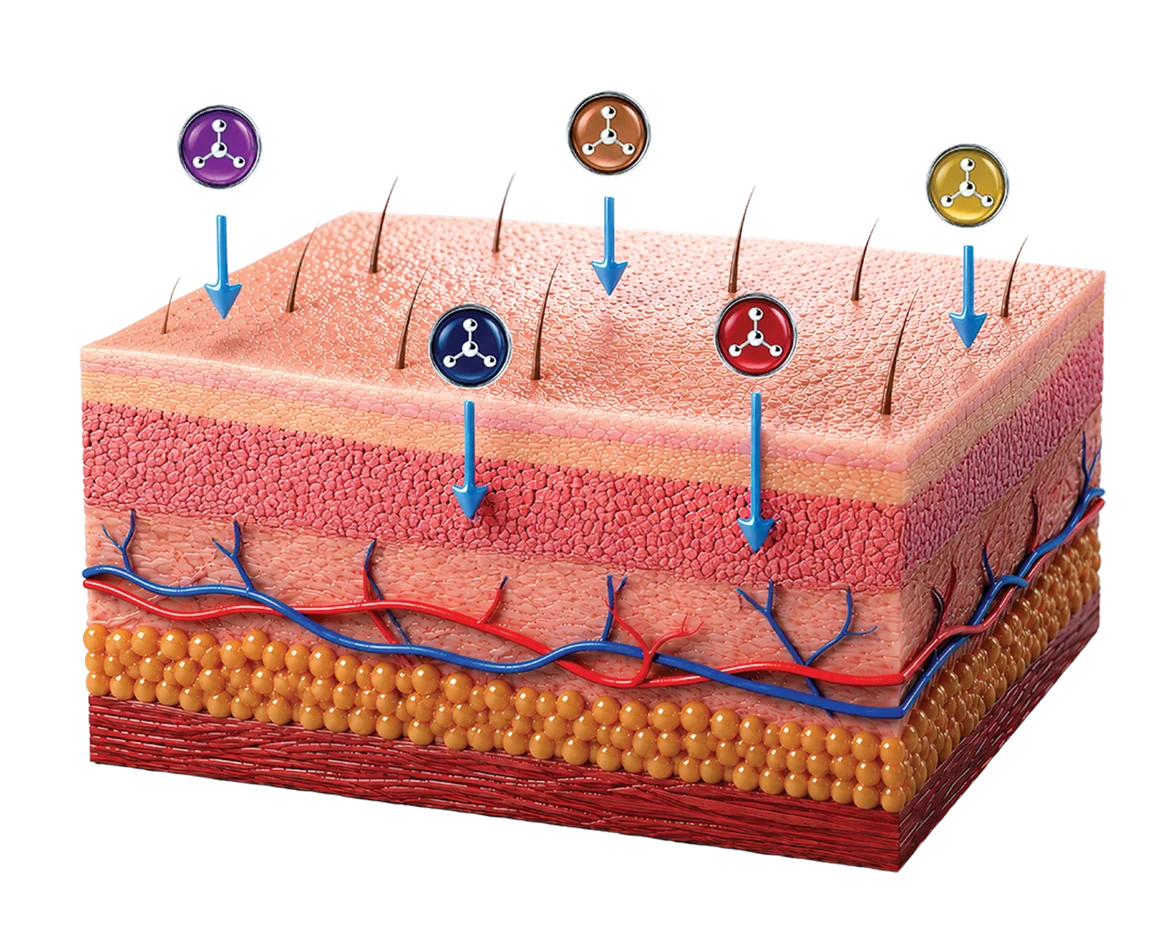
Many chemical agents penetrate human skin within seconds to minutes, initiating rapid systemic absorption1-3

Skin penetration of chemical agents1,3-5

  1. 1Direct skin exposure to chemical agents
  2. 2Penetration through to dermal layers
  3. 3Rapid systemic absorption, leading to widespread effects
TIME IS OF THE ESSENCE

With chemical agent exposure, there is a narrow window of opportunity for intervention.1,8

WITH A DUAL MECHANISM OF ACTION, RSDL IS BUILT FOR LIFE-CRITICAL SCENARIOS

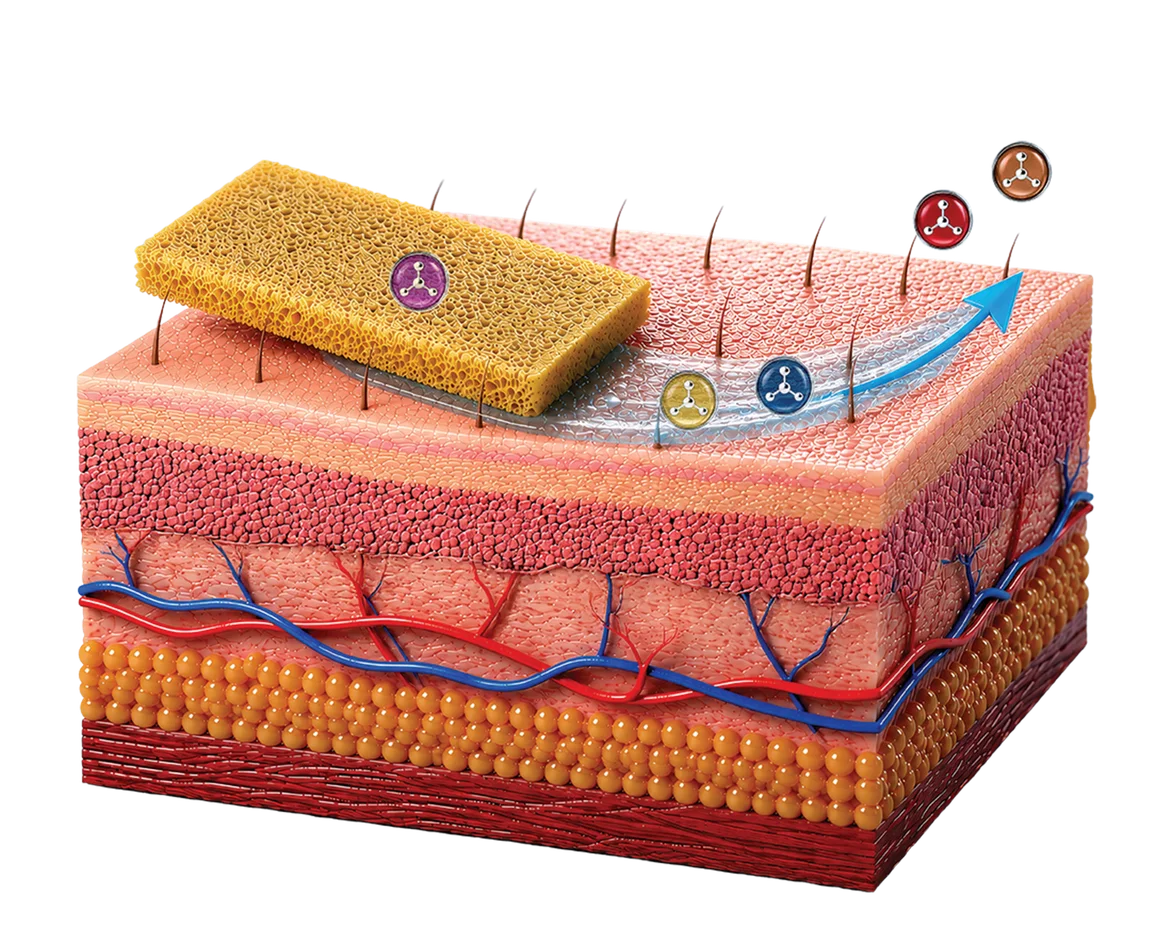
RSDL achieves decontamination through a combination of physical removal and rapid chemical neutralization5,9

How RSDL works against chemical warfare agents5,9,*

Chemical neutralizationPhysical removal
Dual MoA

  • Foam sponge removes chemicals from the skin
  • KBDO inside the sponge activates chemical neutralization. Residue left on the skin will work to neutralize remaining chemicals not removed by the sponge

Rapid action

  • Neutralization occurs within 2 minutes
  • T-2 toxin
  • Soman (GD)
  • Sarin (GB)
  • V-series nerve agent (VX)
  • Mustard gas (HD)

*Decontamination data come from studies of animals and ex vivo human skin.10-13

KBDO=potassium 2,3-butanedione monoximate.

Important Safety Information

Intended Use

The RSDL® (Reactive Skin Decontamination Lotion) kit is intended to remove and/or neutralize chemical warfare agents (CWA) and T-2 toxin from the skin. For external use only by trained individuals. Use only if chemical warfare agent exposure is suspected.

CAUTION: Use only as directed. RSDL® is not a substitute for proper protective breathing devices and garments. Not for use prior to exposure (i.e., prophylactic use) or whole-body decontamination. Allow RSDL® to remain on the skin for at least two minutes. An RSDL® ingredient is absorbed through the skin which may cause adverse effects. Avoid leaving on the skin for long periods. Avoid contact with the eyes and mucous membranes and rinse eyes thoroughly if contact occurs. Remove RSDL® with soap and water when conditions permit. Keep out of reach of children.

WARNING: Fire Hazard. Combustion may occur upon contact with strong oxidizing chemicals (e.g., HTH [calcium hypochlorite], Super Tropical Bleach). Do not discard used RSDL® components into strong oxidizing chemicals or their containers.

The SAFETY Act (“the Act”) provides incentives for the development and deployment of anti-terrorism technologies by creating a system of “risk management” and a system of “litigation management.” The purpose of the Act is to ensure that the threat of liability does not deter potential manufacturers or Sellers of anti-terrorism technologies from developing, commercializing, and deploying technologies that could significantly reduce the risks or mitigate the effects of large-scale terrorist events. Thus, the Act creates certain liability limitations for “claims arising out of, relating to or resulting from an Act of Terrorism” where Qualified Anti-Terrorism Technologies have been deployed. The Act does not limit liability for harms caused by anti-terrorism technologies when no Act of Terrorism has occurred.

Suspected Adverse Events, Product Complaints & Medical Information:
serbmedinfo@serb.com / 877-377-3784

For more information on RSDL including order inquiries, please contact:
SERB MEDICAL SOLUTIONS INC. / 300 Four Falls Corporate Center, 300 Conshohocken State Road, Suite 300, West Conshohocken, PA 19428-3820
RSDL@serb.com

References
  1. Ciottone GR. Toxidome recognition in chemical-weapons attacks. N Engl J Med. 2018;378(17):1611-1620.
  2. Hassard JF, Nieuwenhuizen MS. Chemical threats. In: Biggins PDE, Chana D, eds. CBRNE: Challenges in the 21st Century. Springer International Publishing AG; 2022:17-46.
  3. Blickenstaff NR, Coman G, Blattner CM, Andersen R, Maibach HI. Biology of percutaneous penetration. Rev Environ Health. 2014;29(3):145-155.
  4. Chiang C, Kashetsky N, Feschuk A, Burli A, Law RM, Maibach HI. Efficacy of water-only or soap and water skin decontamination of chemical warfare agents or simulants using in vitro human models: a systematic review. J Appl Toxicol. 2022;42(6):930-941.
  5. Data on file. SERB Pharmaceuticals. Traditional 510(k) Premarket Notification. 2002.
  6. Delfino RT, Ribeiro TS, Figueroa-Villar JD. Organophosphorus compounds as chemical warfare agents: a review. J Braz Chem Soc. 2009;20(3):407-428.
  7. Joosen MJA, van den Berg RM, de Jong AL, van der Schans MJ, Noort D, Langenberg JP. The impact of skin decontamination on the time window for effective treatment of percutaneous VX exposure. Chem Biol Interact. 2017;267:48-56.
  8. Capoun T, Krykorkova J. Comparison of selected methods for individual decontamination of chemical warfare agents. Toxics. 2014;2(2):307-326.
  9. Data on file. Reactive Skin Decontamination Lotion Kit. Clinical Evaluation Plan. March 2025. SERB Pharmaceuticals.
  10. Schwartz MD, Hurst CG, Kirk MA, Reedy SJD, Braue EH Jr. Reactive Skin Decontamination Lotion (RSDL) for the decontamination of chemical warfare agent (CWA) dermal exposure. Curr Pharm Biotechnol. 2012;13(10):1971-1979.
  11. Hanssen KA, Doxzon BF, Lumpkin HL, Clarkson E, Braue EH Jr. Evaluation of Decontamination Systems Challenged With Nerve Agents. US Army Medical Research Institute of Chemical Defense, US Department of War; 2006.
  12. Snider TH, Hayes TL, Jarvis RJ II, Matthews MC, Estep JE. A Medical Research and Evaluation Facility (MREF) and Studies Supporting the Medical Chemical Defense Program on Module 1 of Task 0008, Assessment of RSDL as a Decontaminant Against VX and HD: Efficacy, Equivalence to M291 Skin Decontamination Kit, and Compatibility with Fielded Materials. Battelle; 2001.
  13. Thors L, Lindberg S, Johansson S, et al. RSDL decontamination of human skin contaminated with the nerve agent VX. Toxicol Lett. 2017;269:47-54.